Seasonality is an important factor in agricultural production. Fruit and vegetables follow natural ripening and harvesting cycles, which determine their availability at different times of the year. In the food industry, however, the relationship between seasonality and consumption follows different dynamics.
Many processed products are purchased throughout the year, regardless of the harvesting period of the ingredients used. This requires companies to organise their sourcing and plan processing activities according to demand, while maintaining continuity in production.

Table of contents
The seasonality of raw materials and finished products
A concrete example is strawberries, a fruit traditionally associated with spring.
While the consumption of fresh strawberries is mainly linked to their harvesting season, the same does not necessarily apply to foods that contain them. Jams, yoghurts, ice creams, desserts and strawberry-based confectionery products may also be in demand during the autumn and winter months.
For food companies, this means having to distinguish between the seasonal availability of raw materials and the demand for finished products.
Production planning must therefore take into account market requirements, the volumes needed and the availability of the ingredients required to keep recipes in the product range.
The role of frozen raw materials
In food processing, freezing is one of the methods used to manage the availability of seasonal raw materials.
Through freezing and the maintenance of the cold chain, fruit can be preserved beyond the harvesting period and used in subsequent industrial processing operations.
This allows companies to use seasonal ingredients at different times of the year, reducing their dependence on the immediate availability of fresh produce.
Choosing frozen raw materials can also contribute to more flexible sourcing management, making it easier to schedule processing activities according to production requirements.
The Palimex offering: frozen strawberries
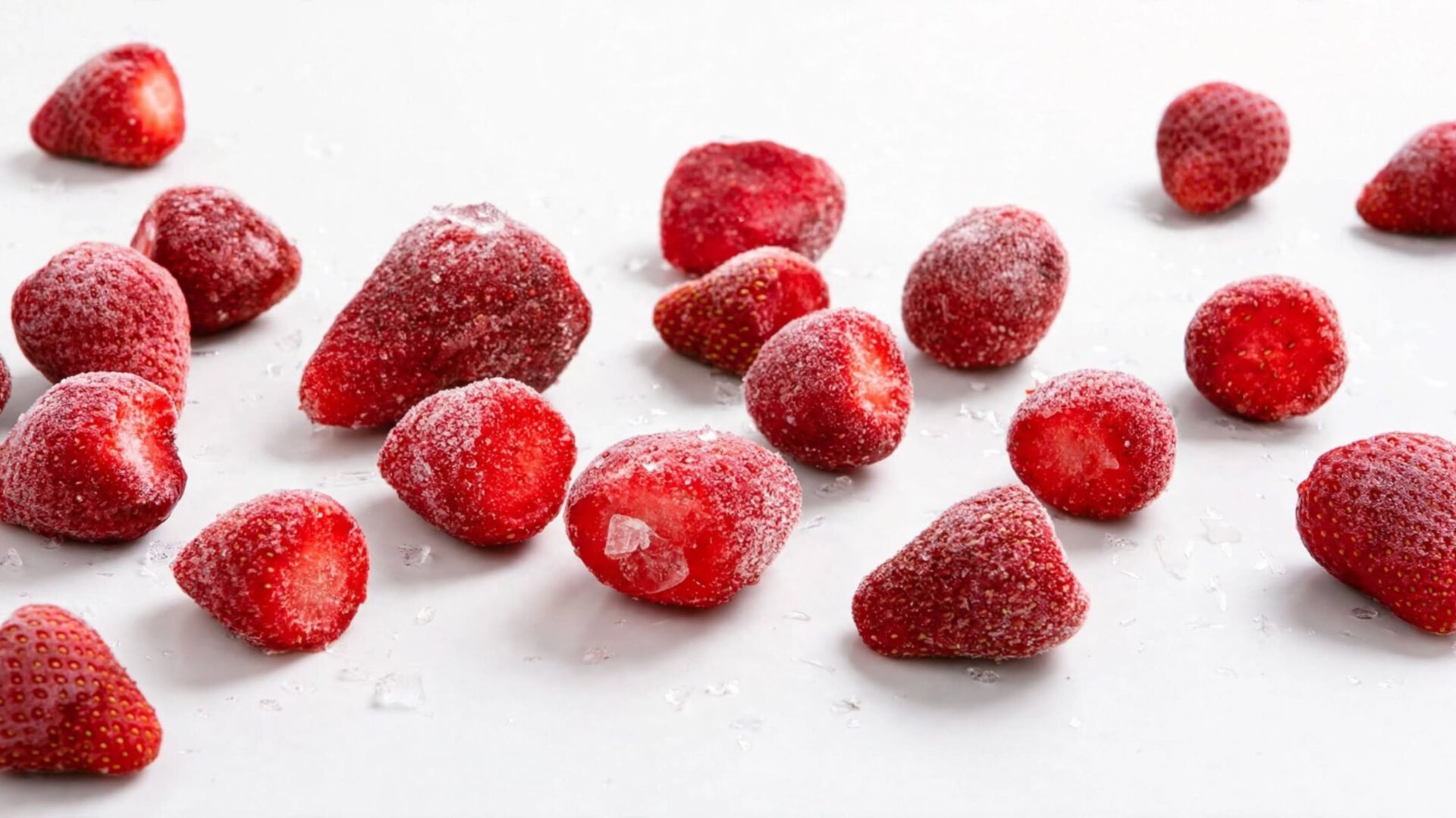
Palimex frozen strawberries provide a solution for companies that use this ingredient in their preparations throughout the year.
Available whole, they can be used in various food industry applications, including jams, compotes, ice creams, semifreddos and desserts.
The availability of the product outside the spring season makes it possible to schedule processing activities without relying exclusively on the availability of fresh strawberries.
For companies producing fruit-based products, having access to a raw material available throughout the year represents an advantage in purchasing management and production planning.
From market demand to production planning
Industrial production requires planning that takes into account both market requirements and the characteristics of raw materials.
A finished product may remain in the product range for twelve months, while one of its main ingredients may have a limited harvesting period. For this reason, raw material availability must be assessed as early as the planning stage.
The use of frozen ingredients makes it possible to manage this difference, helping to maintain continuity in processing activities and greater flexibility in organising sourcing.
Seasonality therefore remains a characteristic of agricultural production, but it does not necessarily determine the industrial production schedule.
Palimex: a partner for the needs of the food industry
Every company has different requirements, depending on the type of product, volumes and processing schedules.
For this reason, Palimex supports each customer in selecting the most suitable product, drawing on its experience in the agri-food sector and an international network of qualified suppliers.
The year-round availability of frozen ingredients makes it possible to meet the needs of a food industry that requires continuity, quality and flexibility.
If you would like to receive more information about Palimex frozen strawberries or learn about the solutions best suited to your production requirements, our team is at your disposal.